
If you run a business, you’ve probably felt the temptation. You post a great photo on social media, a little blue box pops up saying “Boost this post to reach 5,000 more people,” and you hand over twenty bucks.
The result? A handful of likes, zero new customers, and a sinking feeling that digital marketing is just a money pit.
Here is the truth: paid ads are great for scaling, but if your organic (free) digital marketing framework is weak, you are pouring water into a leaky bucket. To build an audience that actually buys, you need to align your content with how people make decisions online.
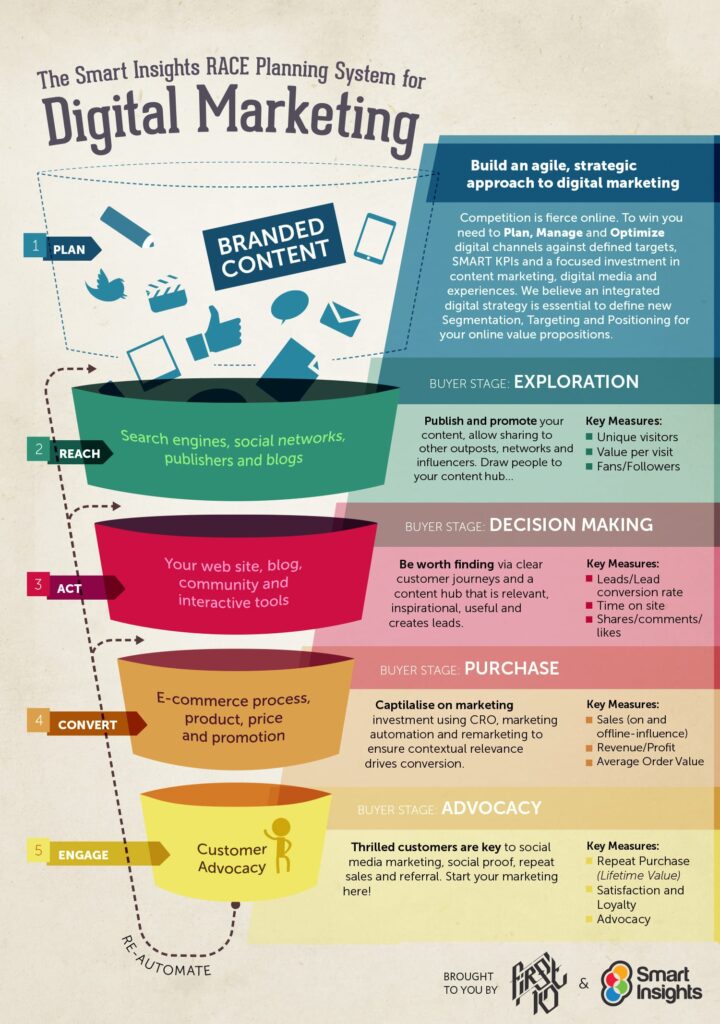
As shown in the marketing framework above, digital marketing is a journey that guides a stranger from the “Reach” phase all the way to becoming a buying customer. Here are three free, organic strategies to build that funnel.
1. Stop Selling Features, Start Solving Problems (Content Marketing)
Nobody goes online looking to buy a “10-step software system.” They go online looking to fix a problem, like “how to automate my business invoicing so I can sleep at night.”
Your content should act as the bridge between their problem and your solution.
- The 80/20 Rule: 80% of your posts should provide pure value (tips, tutorials, humor, industry insights). Only 20% should be a direct sales pitch.
- The “Secret Sauce” Fallacy: Don’t be afraid to give away your best tips for free. People pay for implementation, not information. When you show you know your stuff, you build immediate trust.
2. Matchmaking Content and SEO
Search Engine Optimization (SEO) sounds highly technical, but it’s essentially digital matchmaking. Your job is to figure out exactly what your ideal customer is typing into Google, and then write the absolute best answer to that question on your blog or website.
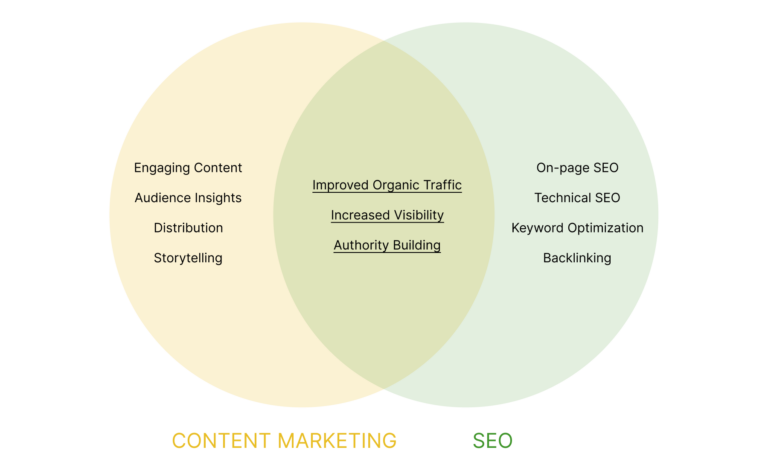
As the diagram illustrates, great content and SEO must work together. While content marketing handles storytelling and engagement, SEO ensures technical optimization and keywords so search engines can actually find you. When they overlap, your organic traffic explodes.
How to start with zero budget:
- Long-tail keywords: Instead of trying to rank for a massive word like “Shoes,” target longer, specific phrases like “Most comfortable running shoes for wide feet.”
- AnswerthePublic: Use free tools to see the exact questions real people are asking online about your niche.
3. Build an Email List (Your Only Real Digital Property)
Social media platforms are rented space. If an algorithm changes tomorrow, or an app goes down, you could lose access to your followers instantly. Your email list is the only digital asset you own entirely.
| Marketing Channel | Average Conversion Rate | Why It Matters |
| Social Media | ~0.7% to 1% | Great for brand discovery and awareness. |
| Email Marketing | ~2% to 3% | Direct, distraction-free line to your warmest leads. |
To get people onto your list, offer a Lead Magnet—a free checklist, an e-book, or a discount code in exchange for their email address. Once they are in, treat their inbox with respect by sending regular, high-value insights.
The Takeaway: Consistency Wins the Long Game
Paid ads can get you quick visibility, but organic digital marketing builds a sustainable asset. By creating problem-solving content, optimizing it for search engines, and capturing those leads on an email list, you build a system that generates sales even when you are asleep.
Which of these three areas does your business need to work on the most right now? Drop your thoughts or ask a question in the comments below!